This post is part of our Feature Spotlight series, where we break down TalentPrism features that staffing teams use every day: what the feature does, how it works, and why it matters for your business.
The first question staffing owners ask about AI voice interviews isn’t about the technology. It’s: will candidates actually put up with talking to an AI?
So we looked at what candidates did, and said, in two weeks of real interviews.
How it works
A candidate applies for a job. Instead of waiting for a recruiter to call, they take a short spoken pre-screen with the AI recruiter, whenever it suits them, from their phone or browser.
The AI asks about their background and the job’s must-haves, answers their questions from the job details, and wraps up. The recruiter gets the answers, a summary and the recording, and decides who to call.
Two weeks of interviews
The numbers come from one aerospace & engineering contract staffing firm, over two weeks in September 2026. They cover every AI voice interview at the firm in that time, across all its roles: engineering, technicians, machinists, HR, accounting and procurement.
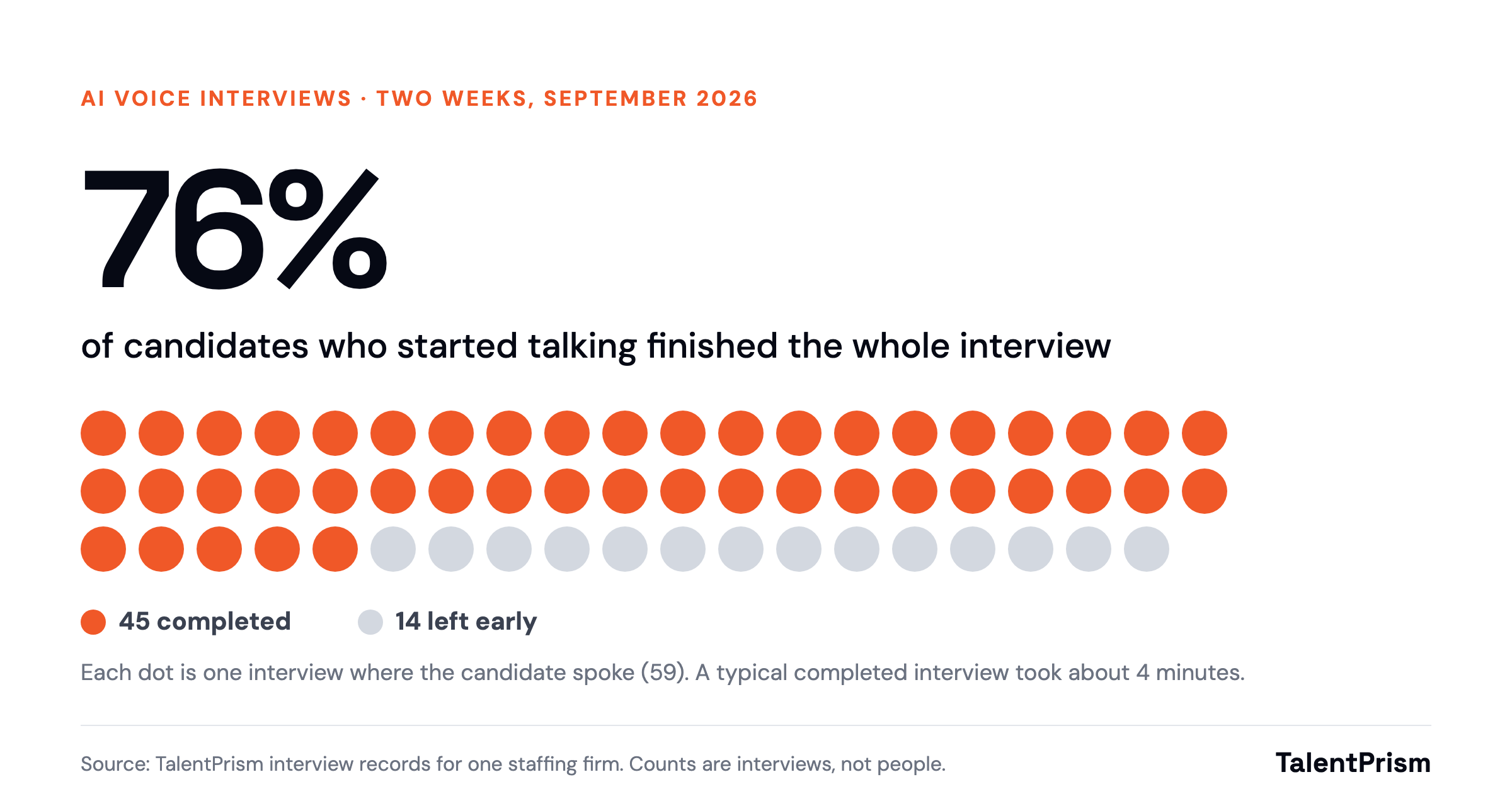
- 68 interviews started. In 59 the candidate spoke.
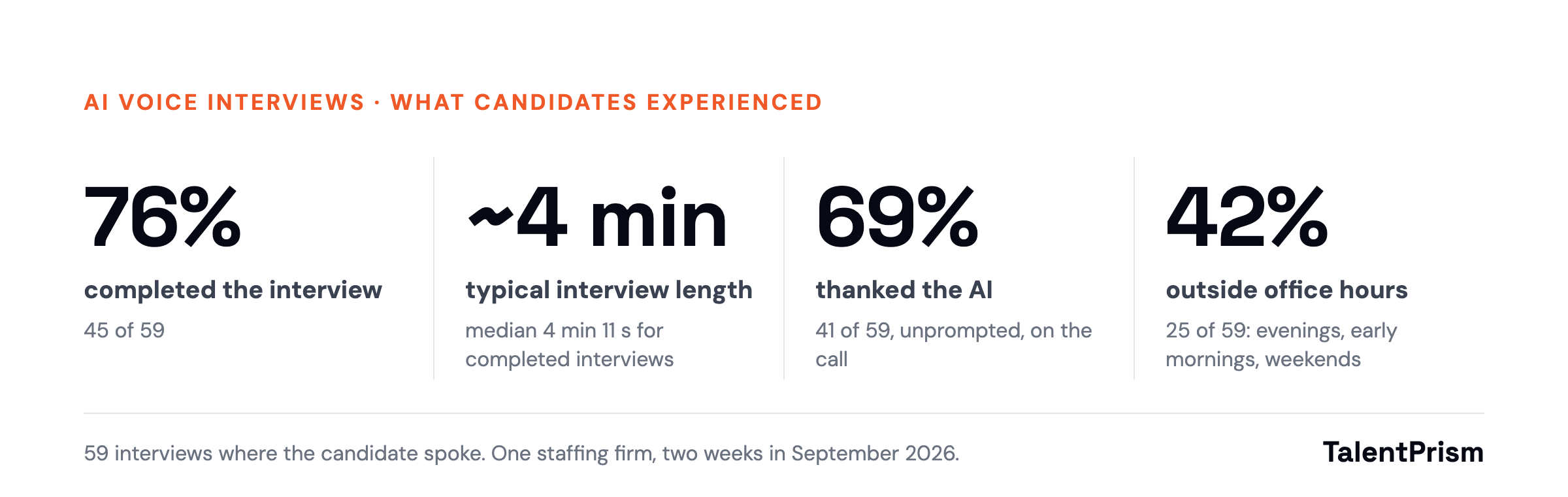
- 45 of 59 (76%) reached the end of the questions.
- A typical completed interview took about 4 minutes (median 4 min 11 s, 6 spoken answers).
- 41 of 59 (69%) thanked the AI interviewer on the call, unprompted.
- 25 of 59 (42%) happened in the evening, early morning or at the weekend, when no recruiter is at a desk.
That last one matters. Nearly half of these candidates were ready to talk at a time when nobody at the firm could have picked up the phone.
In the candidates’ own words
These are closing remarks, word for word from the transcripts, with names and employers removed.
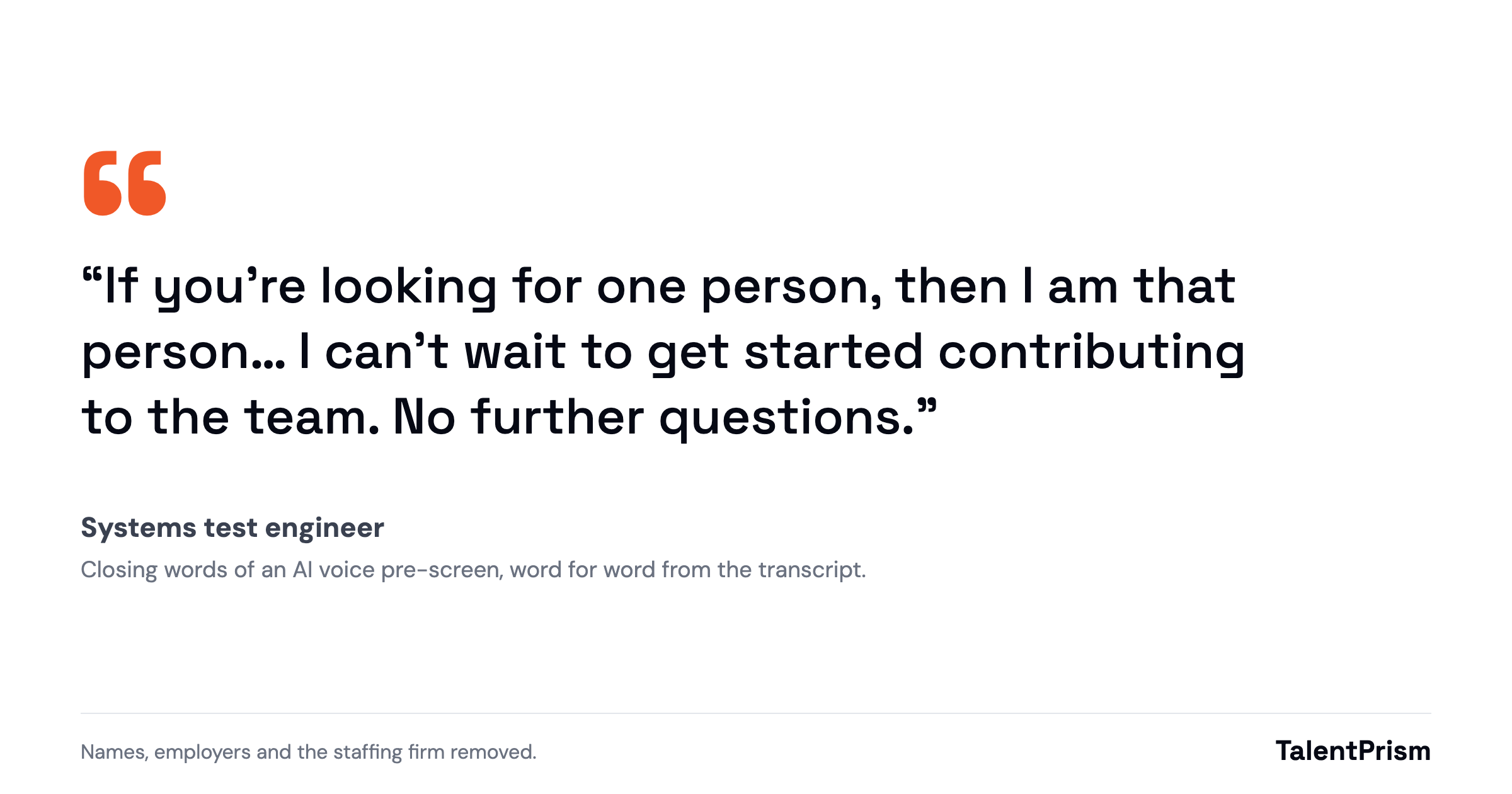
“No. I look forward to speaking with the recruiter. Thank you for your time.” — Avionics repair technician
“No. Thank you for your time. I really appreciate it.” — Buyer / procurement analyst
“I’m very comfortable working in teams, working with people. Yeah. I’m excited… No. Thank you so much.” — HR assistant
“Thank you. I will be looking forward to hearing back from you. I would like to also give my number versus the number that’s on my resume.” — Project manager
Candidates ask questions too
The interview isn’t one-way. Candidates asked about pay, contract terms and next steps. The AI answered from the job details, and when it didn’t know, it said so and passed the question to the recruiter.
- “Is this a contract role, or is this a direct hire?” It’s a 12-month contract, 4/10 schedule, first shift. Candidate: “4 tens sounds good.”
- “What is the salary range for this role?” It gave the posted rate, “depending on your experience”, and asked whether it fit. Candidate: “That is something I can work with.”
- “Is there a per diem along with the role?” It said it didn’t have per-diem details and offered to note the question for the recruiter. Candidate: “Yes, you can send that off to the recruiter.”
- “Would this job be suitable for a senior person?” It said the role is junior and asked whether they’re open to it or prefer senior roles, so the recruiter sees the answer.
It also picked up details recruiters need: an updated phone number, a start date (“I can start on the 28th”), and a candidate offering to refer classmates.
Why it matters for your desk
Applicants can take the screen as soon as they apply, including the ones who apply at 9 p.m. Recruiters start the morning with answers and recordings instead of a list of people to chase, and spend their calls on the candidates worth a call.
How to read these numbers: one staffing firm, all AI voice interviews over two weeks in September 2026, across all roles. Counts are interviews, not people (one candidate interviewed for several roles), and “thanked” is a word match on what the candidate said. Tester calls are excluded.
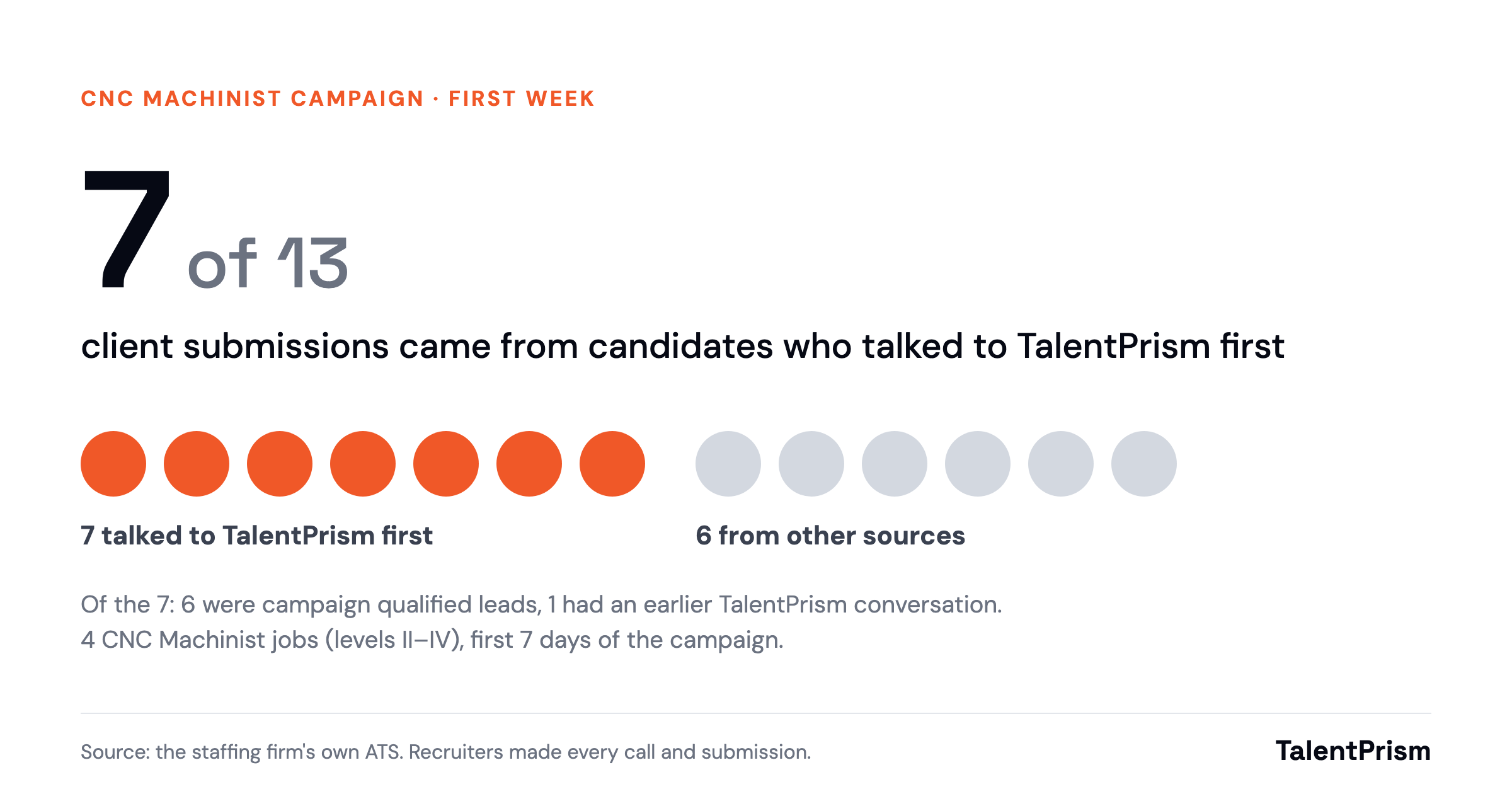
Related: Case Study: One Week, 1,187 Machinists, and 7 of 13 Client Submissions.
Want to hear what your candidates would hear? Book a demo.
This post is part of the Feature Spotlight series. Follow along as we cover more TalentPrism features that help staffing teams work smarter.