Every staffing owner has heard an AI pitch that ends with a big chart and no way to check it.
So this one starts with where the numbers came from. The outreach and conversation numbers are from TalentPrism. The outcomes (who was called, who was submitted to the client, who wasn’t hired) come from the staffing firm’s own applicant tracking system, not from our chat logs.
The firm is an aerospace & engineering contract staffing firm. We’re keeping them anonymous, along with the end client, the recruiters and every candidate.
The setup
In September 2026 the firm had four open CNC Machinist jobs (levels II to IV). Instead of starting a new search, they started with the machinists already in their own database.
TalentPrism texted them. Everyone who replied got a conversation with the AI recruiter: what they do, where they’ll work, what they’re looking for, and whether any of the four jobs fit. The recruiters stayed in charge of calls and submissions.
From outreach to qualified lead
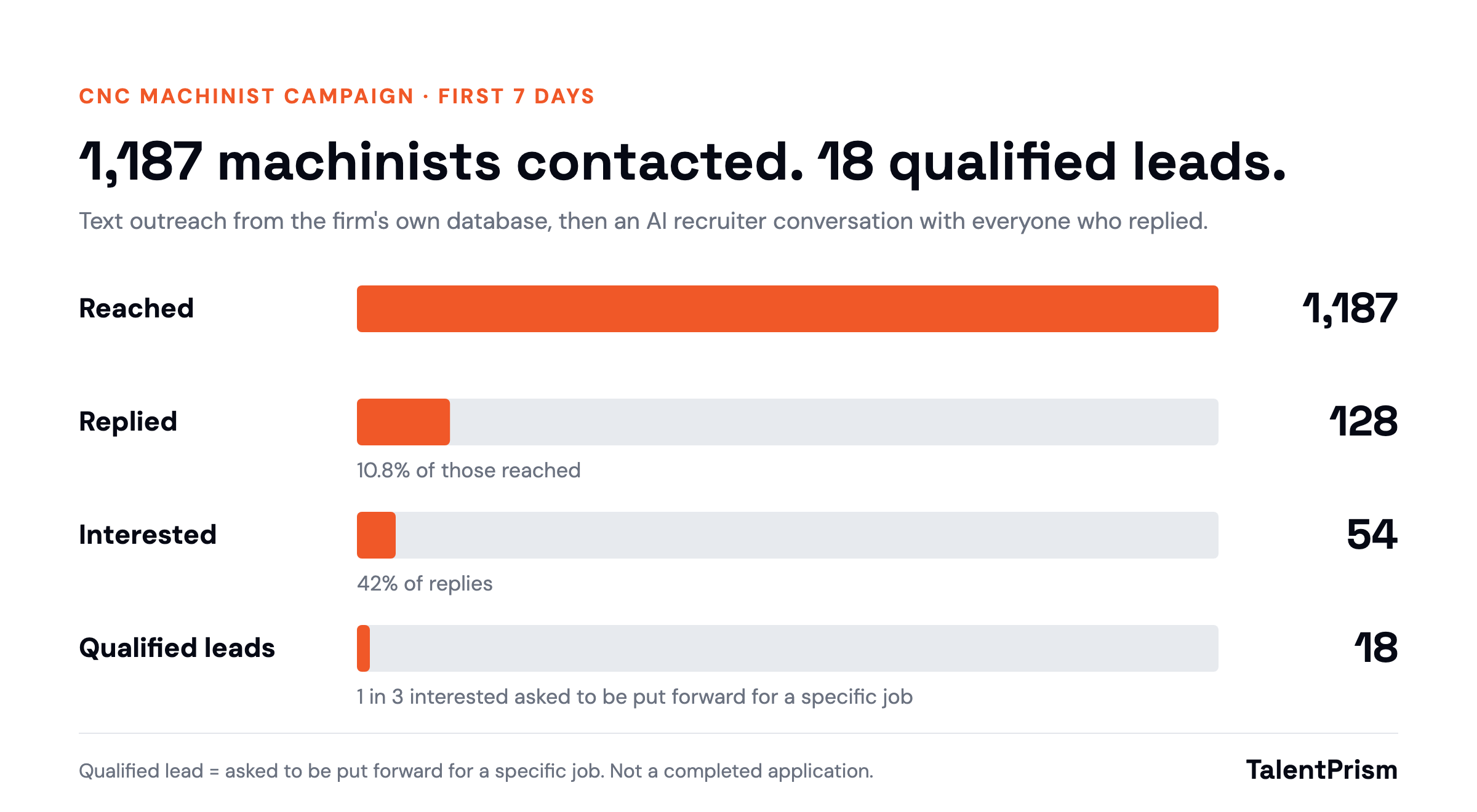
- 1,187 machinists contacted from the firm’s own database
- 128 replied (10.8%)
- 54 were interested (42% of replies)
- 18 became qualified leads: they asked to be put forward for a specific job
A qualified lead here is not a completed application. It means that in the conversation, the candidate asked to be put forward for a named job. What happens next is the recruiter’s call.
What recruiters did with the 18 leads
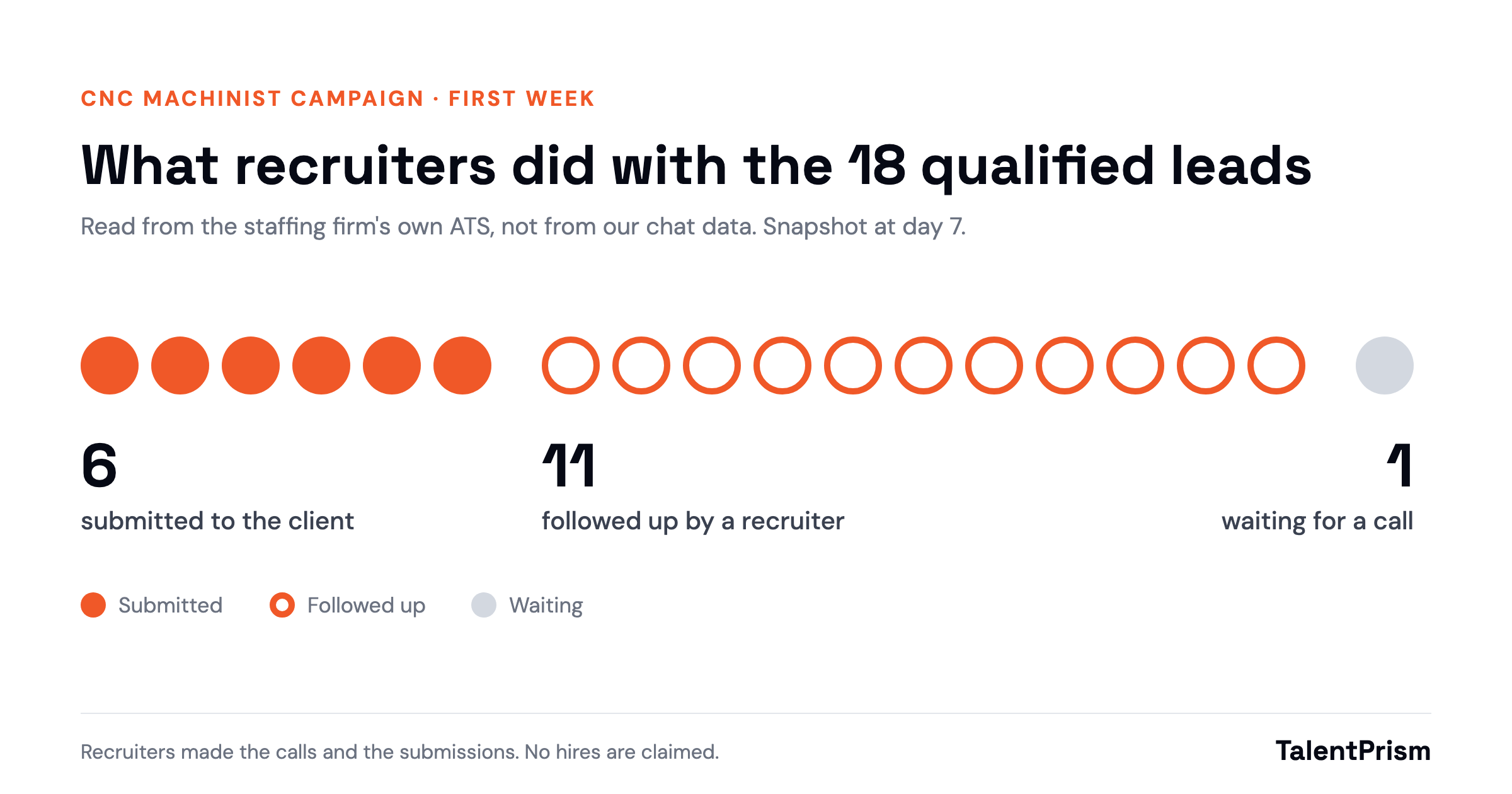
By day 7, according to the firm’s ATS:
- 6 had been submitted to the client
- 11 had been followed up by a recruiter
- 1 was waiting for a call
The first client submissions went out 2 days after launch.
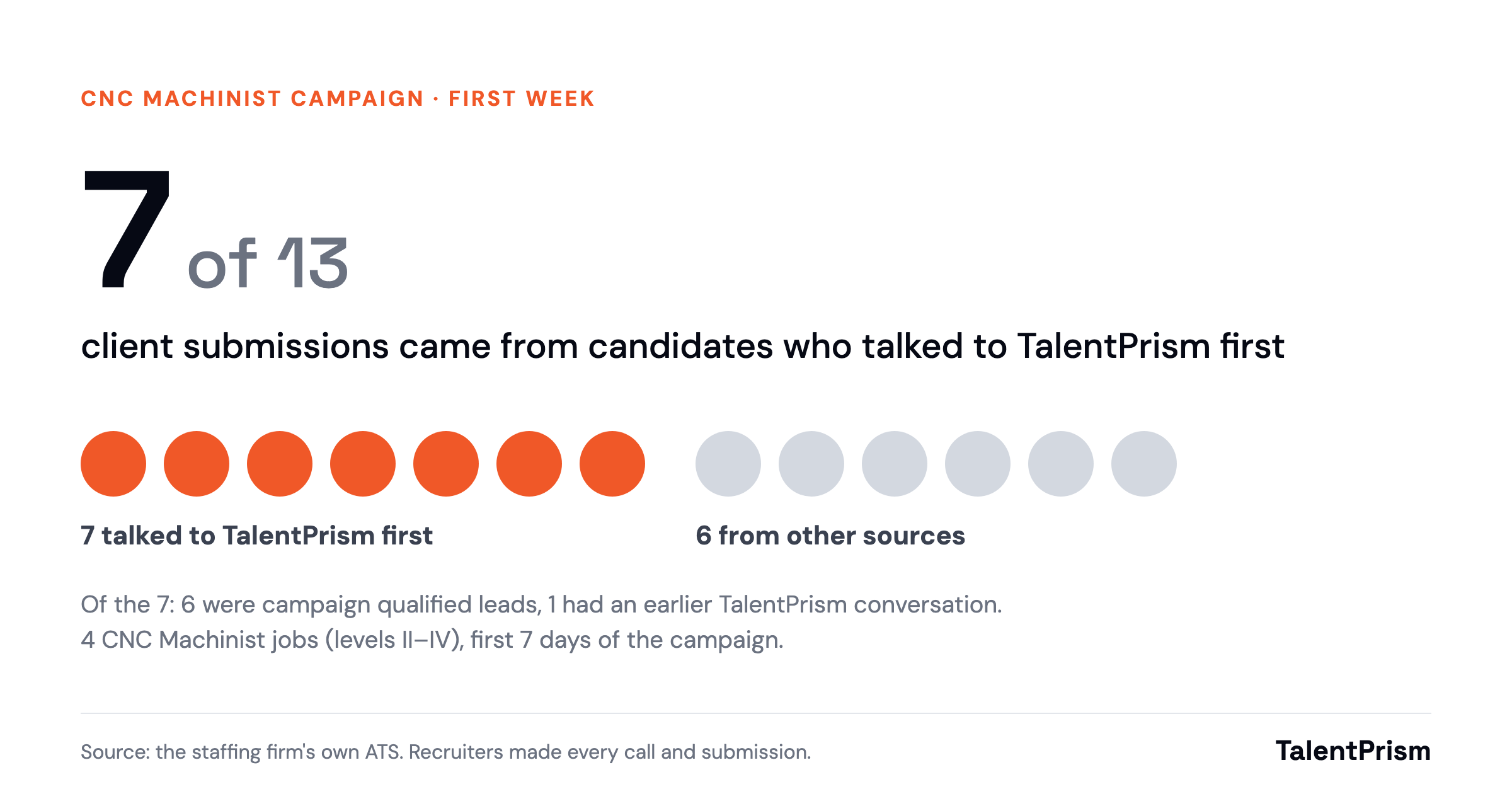
7 of 13 submissions had a TalentPrism conversation first
The chart at the top of this post is the headline. Across the four jobs, recruiters submitted 13 candidates to the client that week. 7 of them had talked to TalentPrism before the submission: 6 were campaign qualified leads, and 1 had an earlier TalentPrism conversation.
That’s what the number says, and no more. Recruiters made every call and every submission. The TalentPrism conversation came first. So far the client has made one decision on those 7 (not hired), and the other 6 are pending. No hires are claimed.
It kept working through the week
The campaign didn’t stop at day 2. Replies kept coming in, and the recruiters worked through the backlog.
| Day 2 | Day 7 | |
|---|---|---|
| Replied | 114 | 128 |
| Interested | 49 | 54 |
| Qualified leads | 16 | 18 |
| Client submissions | 5 | 7 |
| Leads waiting for a recruiter | 7 | 1 |
Candidate G, start to finish
One of the 7 shows how the AI recruiter and the human recruiter share the work.
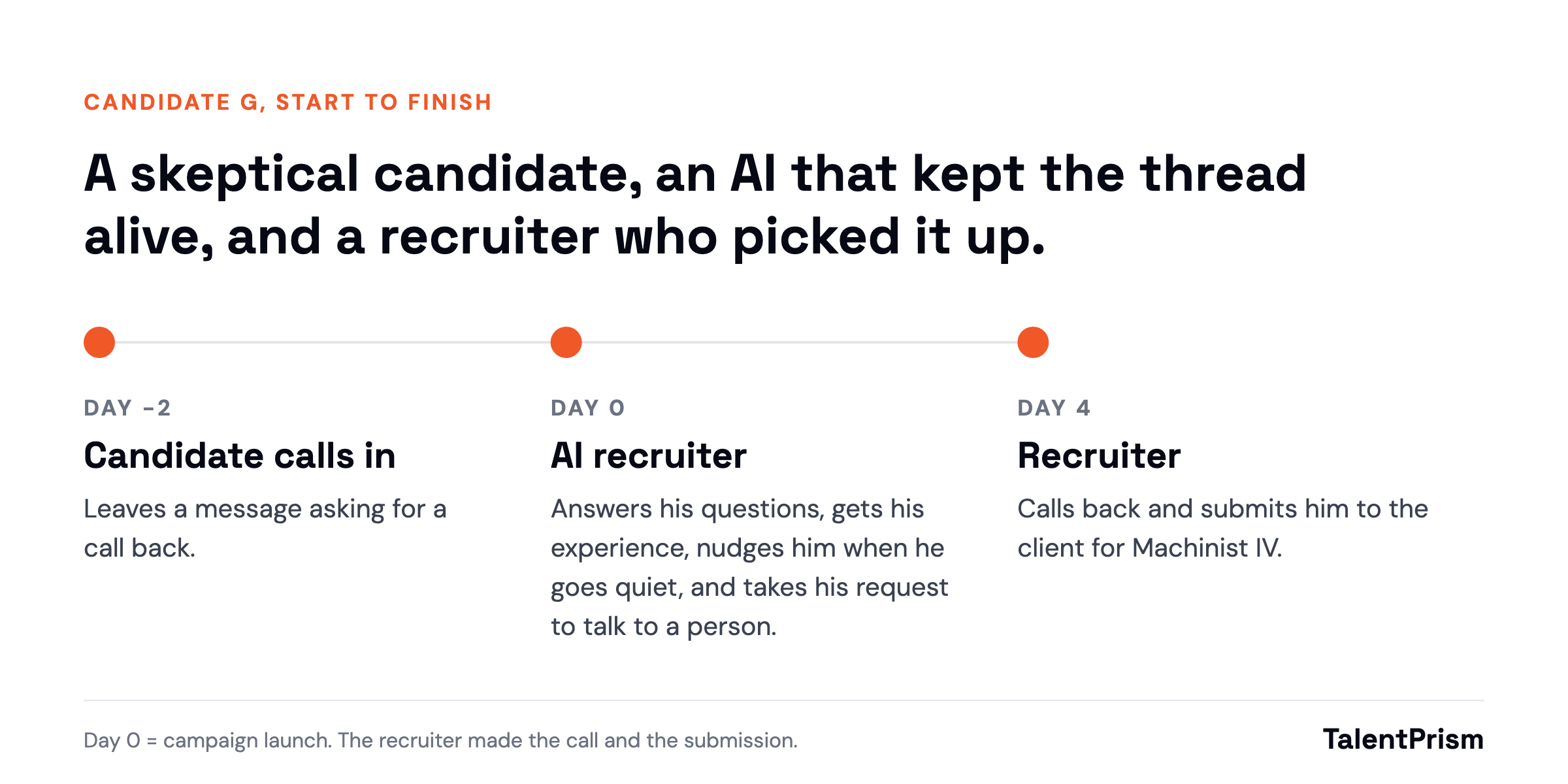
He was skeptical. He had called in two days before the campaign and left a message asking for a call back. When the campaign started, the AI recruiter answered his questions and got his experience. When he went quiet, it nudged him, and it passed on his request to talk to a person. On day 4 a recruiter called him back and submitted him to the client for a Machinist IV job.
Neither half does this alone. Generating applicant activity is half the work. Getting what a submittal needs is the other half.
What this adds up to
A campaign like this doesn’t replace recruiters. It changes what’s on their desk in the morning: fewer cold names, more people who have already said what they want and which job they want to be put forward for.
That’s the whole idea. Know who’s available, interested, and worth a call.
How to read these numbers: one staffing firm, one campaign’s first 7 days, September 2026. Campaign outcomes were read from the firm’s own ATS. “Talked to TalentPrism first” means a TalentPrism conversation came before the submission. It does not mean TalentPrism caused it.
Related: Feature Spotlight: AI Voice Interviews, on what candidates experience in the AI pre-screen.
Want to see what this looks like on your own candidate database? Book a demo.